1. Identify the decisive details
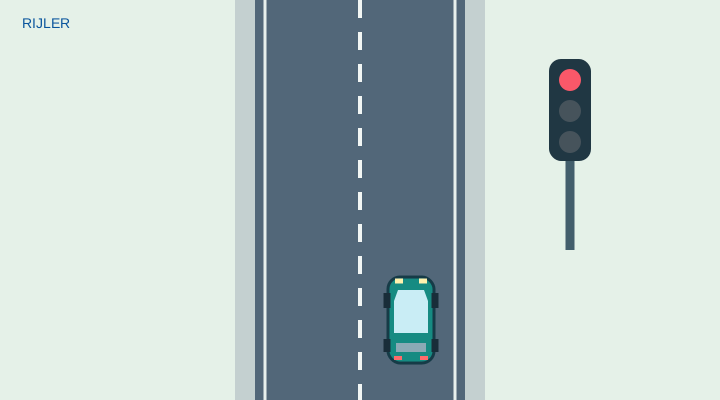
A light far ahead is red. There is room to slow gradually and no need for emergency braking. Which approach best combines safety and economical driving?
2. Compare the possible decisions
- Keep accelerating until close, then use the brakes firmly.
- Select neutral and switch off the engine while moving.
- Ease off early, monitor traffic and brake progressively as needed.
Show the answer and explanation
Correct answer: C · Ease off early, monitor traffic and brake progressively as needed.
Anticipation avoids wasting fuel accelerating toward a known stop and leaves more time to react. Late hard braking wastes that margin. Switching off the moving vehicle can impair assistance and control; follow the vehicle handbook.
3. What changes if the situation changes?
If a sudden hazard requires emergency braking, immediate safety takes priority over fuel economy. Anticipation is not a reason to delay necessary braking.
Regulatory source ↗10.1; educational anticipationReviewed 2026-11-06