Before stepping out, assess moving traffic and where you could wait safely. Do not stand in a live traffic lane to inspect damage or take photographs. Protect people first; documenting a dent is less urgent than avoiding another collision.
Lesson · Accidents & emergencies
After a collision: prevent a second accident
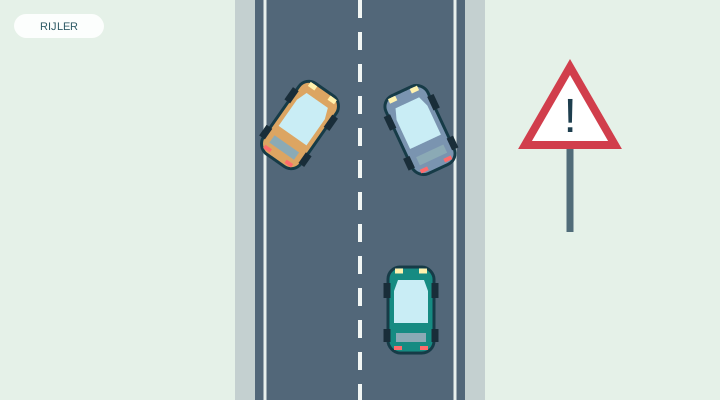
For an emergency call, give the location, direction of travel and what you can safely observe. Follow the dispatcher’s instructions and do not enter danger to gather details. Exchange accident information only when safe; never sign a form whose account you know is inaccurate.
Regulatory source ↗ · Reviewed 2026-11-06
Apply the lesson
Educational difficulty is separate from the legal penalty. These are original practice questions, not official examination items.
Accidents & emergencies: which statement is correct? (1)
- Always move every injured person immediately.
- At an accident, first ensure your own safety and prevent further danger.
- Your first duty is to take photos in the traffic lane.
Show the answer and explanation
Correct answer: B
At an accident, first ensure your own safety and prevent further danger.
Regulatory source ↗You arrive at a collision scene on a busy road. What should you consider before stepping into traffic to help?
- At an accident, first ensure your own safety and prevent further danger.
- Take close-up photos from the live lane first.
- Run into the lane without checking approaching traffic.
Show the answer and explanation
Correct answer: A
At an accident, first ensure your own safety and prevent further danger.
Regulatory source ↗An accident scene is secured, but someone is injured and needs urgent help. What is the next appropriate contact?
- Exchange details and complete the European accident statement.
- Call 112 and describe the location and injuries.
- Contact the police so the absent owner can be informed.
Show the answer and explanation
Correct answer: B
Protect people and prevent further danger first. Then distinguish urgent injuries, exchanging details, an absent owner and clearing a safely movable obstruction.
Regulatory source ↗