Dashboard / BELGIAN CATEGORY B
Sign inCreate account
← Vehicle, passengers & load
Apply the lesson · Standard

Vehicle, passengers & load · Standard

Educational difficulty is separate from the legal penalty. These are original practice questions, not official examination items.

Lesson

Seat belts must be used where fitted, subject to the legal exceptions.

Children under 135 cm normally need an approved child restraint appropriate to their size.

Secure luggage so it cannot shift during braking.

Check tyre pressure and condition regularly, following the manufacturer’s recommendations.

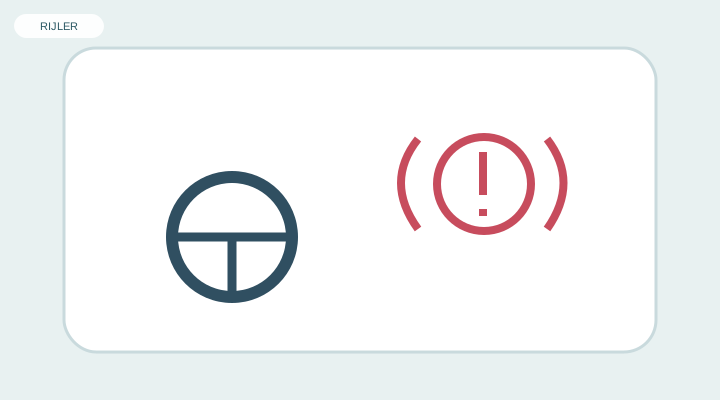
A brake warning light requires prompt attention; stop safely if braking may be impaired.

Regulatory source ↗

Apply the lesson · 7

Question 1

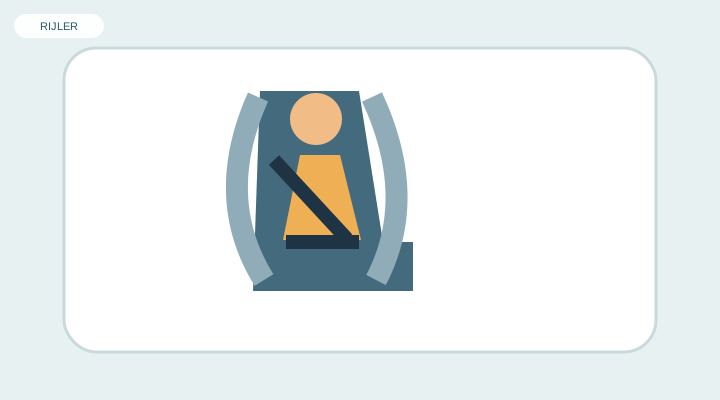
An adult in the rear seat says a seat belt is unnecessary for a short trip. What is the general rule?
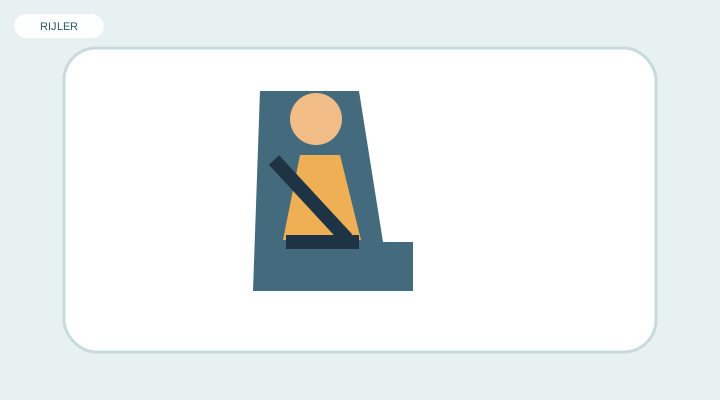
Seat belt
Seat beltOriginal educational diagram · not to scale. Read the question for all conditions.
  1. Rear passengers never need a belt.
  2. Seat belts must be used where fitted, subject to the legal exceptions.
  3. Short trips are automatically exempt.
Show the answer and explanation

Correct answer: B

Seat belts must be used where fitted, subject to the legal exceptions.

Regulatory source ↗
Question 2

A small child under 135 cm travels in an ordinary car, with no legal exception applying. What restraint is normally needed?

Child restraint
Child restraintOriginal educational diagram · not to scale. Read the question for all conditions.
  1. An adult may hold the child instead.
  2. No restraint if the child sits in the rear.
  3. Children under 135 cm normally need an approved child restraint appropriate to their size.
Show the answer and explanation

Correct answer: C

Children under 135 cm normally need an approved child restraint appropriate to their size.

Regulatory source ↗
Question 3

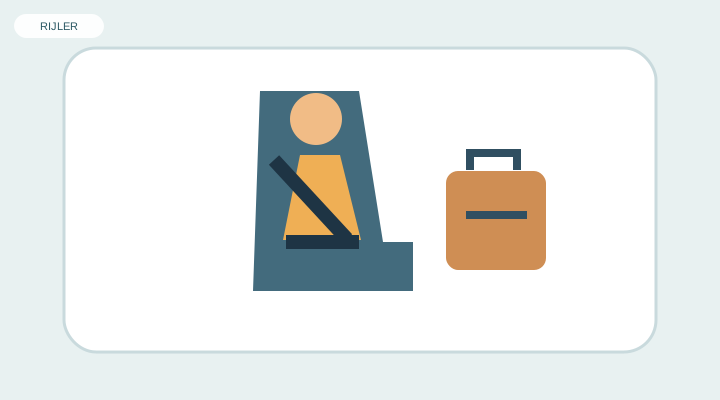
A heavy suitcase lies loose behind the seats. What risk should be addressed before leaving?

Luggage in the vehicle
Luggage in the vehicleOriginal educational diagram · not to scale. Read the question for all conditions.
  1. Secure luggage so it cannot shift during braking.
  2. It cannot move because it is heavy.
  3. Only luggage on the roof needs securing.
Show the answer and explanation

Correct answer: A

Secure luggage so it cannot shift during braking.

Regulatory source ↗
Question 4

Before a long trip you notice uneven tyre wear. Which maintenance approach is appropriate?

Tyre condition
Tyre conditionOriginal educational diagram · not to scale. Read the question for all conditions.
  1. Ignore it if the engine starts normally.
  2. Check tyre pressure and condition regularly, following the manufacturer’s recommendations.
  3. Check tyres only after a puncture occurs.
Show the answer and explanation

Correct answer: B

Check tyre pressure and condition regularly, following the manufacturer’s recommendations.

Regulatory source ↗
Question 5

The brake warning light appears and braking feels abnormal. What should you prioritise?

Brake warning
Brake warningOriginal educational diagram · not to scale. Read the question for all conditions.
  1. Continue until the next scheduled service.
  2. Cover the warning light to avoid distraction.
  3. A brake warning light requires prompt attention; stop safely if braking may be impaired.
Show the answer and explanation

Correct answer: C

A brake warning light requires prompt attention; stop safely if braking may be impaired.

Regulatory source ↗
Question 6

A rear-facing child seat is planned on the front passenger seat. The frontal airbag is active. Is this arrangement allowed?

Rear-facing seats and airbags
Rear-facing seats and airbagsOriginal educational diagram · not to scale. Read the question for all conditions.
  1. Yes, if the journey is short.
  2. No; the frontal airbag must be deactivated for this arrangement.
  3. Yes, if an adult watches the child.
Show the answer and explanation

Correct answer: B

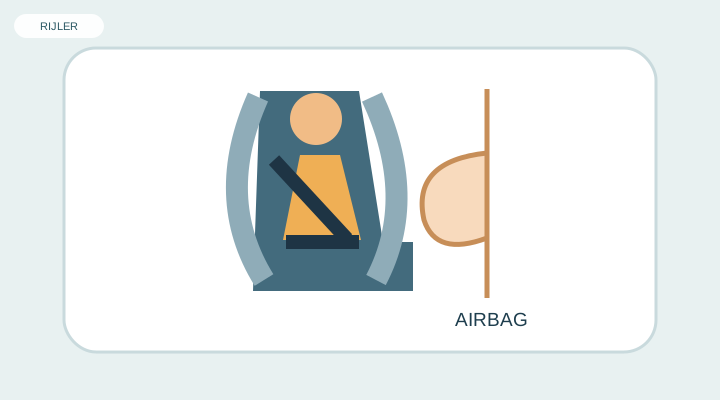
Never transport a child rear-facing on a passenger seat protected by an active frontal airbag. The frontal airbag must be deactivated or reliably deactivated automatically for that arrangement. Follow the vehicle and restraint instructions; moving the seat back does not replace deactivation.

Regulatory source ↗
Question 7

Can sliding the passenger seat backwards replace deactivating its frontal airbag for a rear-facing child restraint?

Rear-facing seats and airbags
Rear-facing seats and airbagsOriginal educational diagram · not to scale. Read the question for all conditions.
  1. Yes, always.
  2. Yes, if the child is asleep.
  3. No; the airbag must still be deactivated.
Show the answer and explanation

Correct answer: C

Never transport a child rear-facing on a passenger seat protected by an active frontal airbag. The frontal airbag must be deactivated or reliably deactivated automatically for that arrangement. Follow the vehicle and restraint instructions; moving the seat back does not replace deactivation.

Regulatory source ↗