A loose bag can move violently during emergency braking. Place luggage securely and keep the driver’s view and controls unobstructed. Check the vehicle’s permitted load and the instructions for roof carriers; an apparently spacious boot does not establish the legal carrying capacity.
Lesson · Vehicle, passengers & load
Secure passengers and luggage before departure
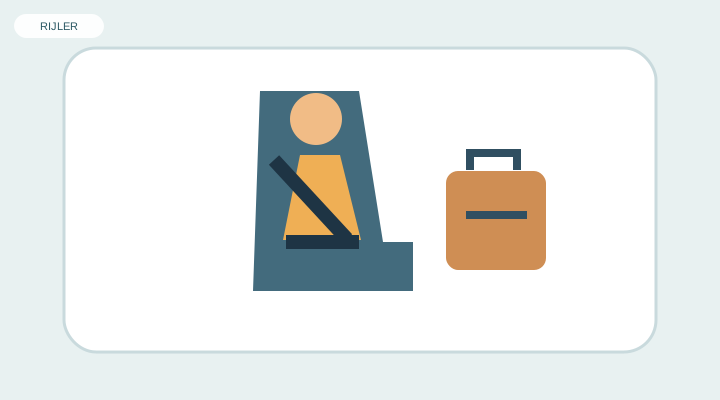
Use the appropriate passenger restraint and check its installation instructions. Recheck belts after a child changes position. Do not continue driving to adjust a restraint: stop safely first. The driver should not divide attention between the road and an unsecured passenger.
Regulatory source ↗ · Reviewed 2026-11-06
Apply the lesson
Educational difficulty is separate from the legal penalty. These are original practice questions, not official examination items.
Vehicle, passengers & load: which statement is correct? (1)
- A passenger can safely hold a small child instead of using a child restraint.
- Loose luggage cannot cause injury during braking.
- Seat belts must be used where fitted, subject to the legal exceptions.
Show the answer and explanation
Correct answer: C
Seat belts must be used where fitted, subject to the legal exceptions.
Regulatory source ↗An adult in the rear seat says a seat belt is unnecessary for a short trip. What is the general rule?
- Rear passengers never need a belt.
- Seat belts must be used where fitted, subject to the legal exceptions.
- Short trips are automatically exempt.
Show the answer and explanation
Correct answer: B
Seat belts must be used where fitted, subject to the legal exceptions.
Regulatory source ↗A rear-facing child restraint is correctly secured in front, but the frontal airbag is active. The passenger seat is moved fully back. Is that enough?
- Not allowed: deactivate the frontal airbag before that rear-facing installation.
- Allowed if the approved restraint is correctly installed as described.
- Not allowed: the required appropriate child restraint is missing.
Show the answer and explanation
Correct answer: A
An adult belt is not automatically an appropriate child restraint. Follow approved seating capacity and child-seat instructions; moving a seat back does not replace disabling the frontal airbag for rear-facing use.
Regulatory source ↗