Spot an obstruction early and assess the remaining width, markings and opposing traffic. Check behind before slowing. An indicator requests cooperation but does not reserve the neighbouring lane or compel another driver to brake.
Lesson · Road position & overtaking
A blocked lane: plan before moving sideways
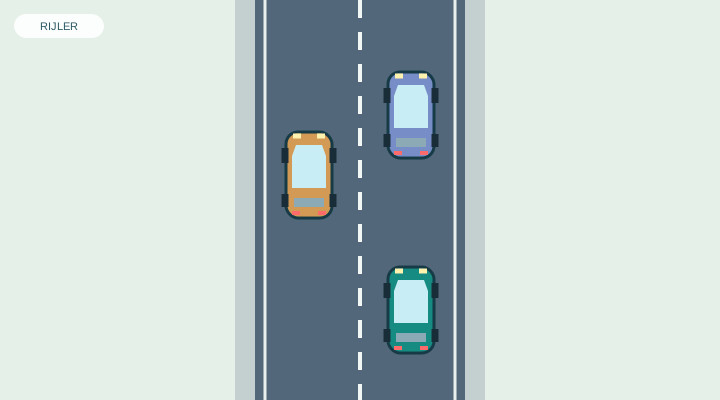
If a safe, permitted gap is unavailable, wait before the obstruction with room to see and manoeuvre. Check the blind spot immediately before moving out and again before returning. Never solve a blocked lane by forcing a cyclist onto the kerb.
Regulatory source ↗ · Reviewed 2026-11-06
Apply the lesson
Educational difficulty is separate from the legal penalty. These are original practice questions, not official examination items.
Road position & overtaking: which statement is correct? (1)
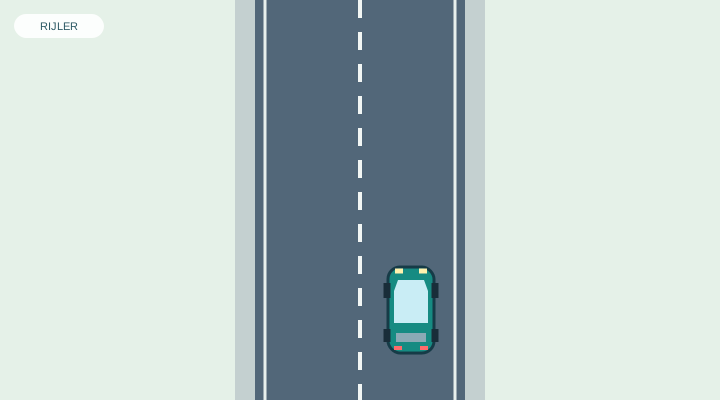
- Normally keep as far right as practicable on the carriageway.
- Signalling a lane change gives you automatic priority.
- You can overtake even when you cannot see oncoming traffic.
Show the answer and explanation
Correct answer: A
Normally keep as far right as practicable on the carriageway.
Regulatory source ↗On a normal two-way road with no obstacle or special lane rule, where should your car generally be positioned?
- Close to the opposing lane for a better view.
- Across the centre line if traffic is light.
- Normally keep as far right as practicable on the carriageway.
Show the answer and explanation
Correct answer: C
Normally keep as far right as practicable on the carriageway.
Regulatory source ↗A double marking has a continuous line nearest your car and a broken line beyond it. You have not started overtaking. May you cross it to overtake?
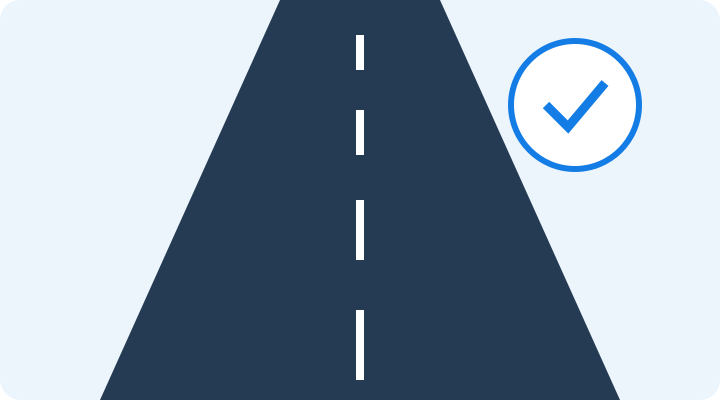
- Cross the broken line only if the manoeuvre is otherwise safe and permitted.
- Merge alternately just before the narrowing.
- Do not cross the continuous line on your side.
Show the answer and explanation
Correct answer: C
A broken line does not grant priority. Distinguish ordinary lane changes from zipper merging in heavily slowed traffic, and read the nearest line of a mixed marking.
Regulatory source ↗