Dashboard / BELGIAN CATEGORY B
Sign inCreate account
← Theory curriculum
Lesson 03

Speed & safe distance

Essential rules, explained step by step.

Educational difficulty is separate from the legal penalty. These are original practice questions, not official examination items.

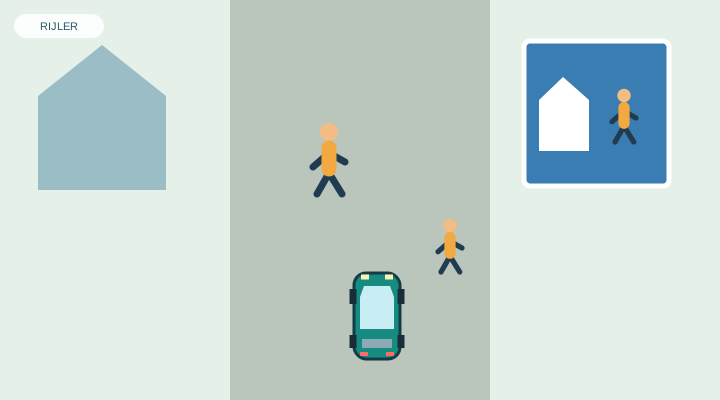
Residential and meeting zones

Residential and meeting zones
Residential and meeting zonesOriginal educational diagram · not to scale. Read the question for all conditions.

In a signed residential or meeting zone, the maximum is 20 km/h. Pedestrians may use the full width; drivers must not endanger or hinder them and must stop when needed. This is a different regime from zone 30.

Regulatory source ↗
1

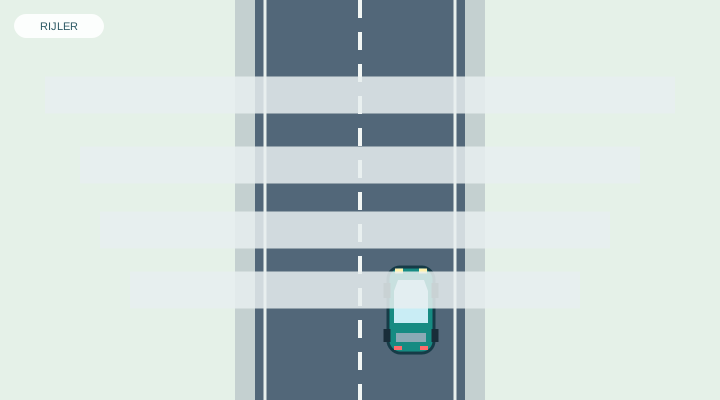
Even below the speed limit, reduce speed when visibility or grip deteriorates.
Reduced visibility
Reduced visibilityOriginal educational diagram · not to scale. Read the question for all conditions.
2

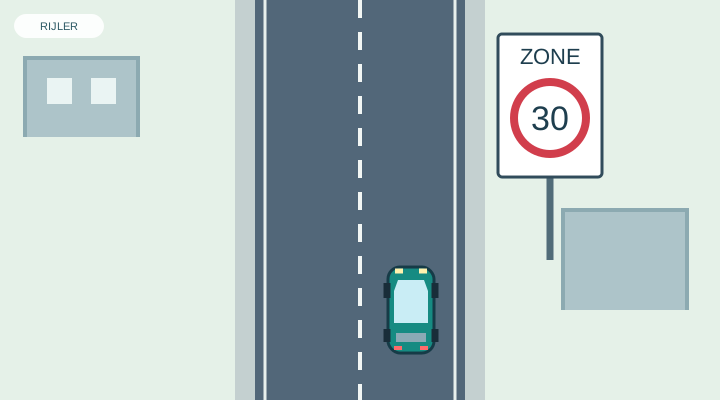
In a signed 30 km/h zone, 30 km/h is the maximum, not a target.
Zone 30
Zone 30Original educational diagram · not to scale. Read the question for all conditions.
3

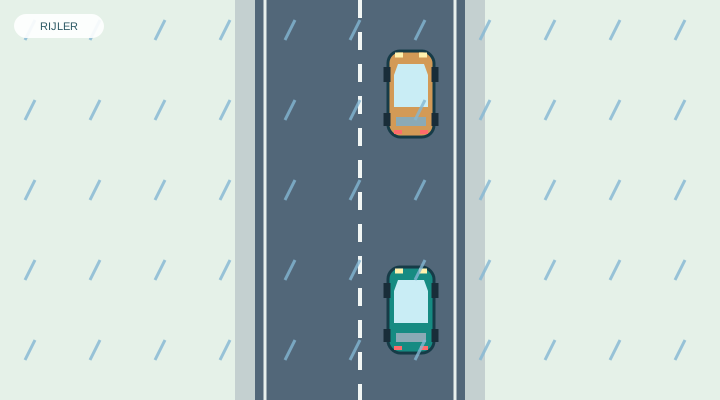
Increase your following distance in rain.
Following in rain
Following in rainOriginal educational diagram · not to scale. Read the question for all conditions.
4

Your stopping distance includes reaction distance and braking distance.
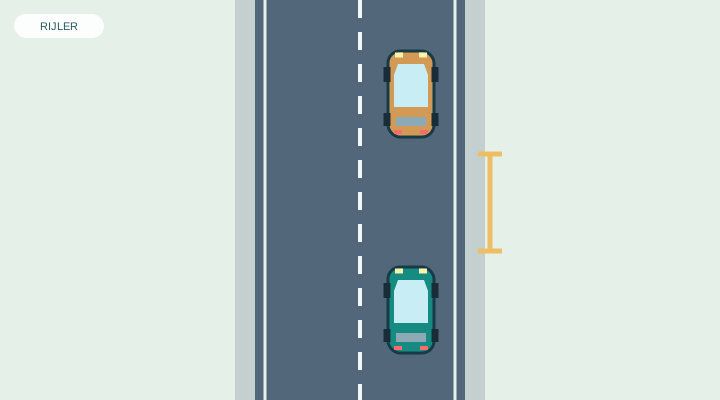
Reaction and braking space
Reaction and braking spaceOriginal educational diagram · not to scale. Read the question for all conditions.
5

A temporary lower speed limit must be respected at roadworks.
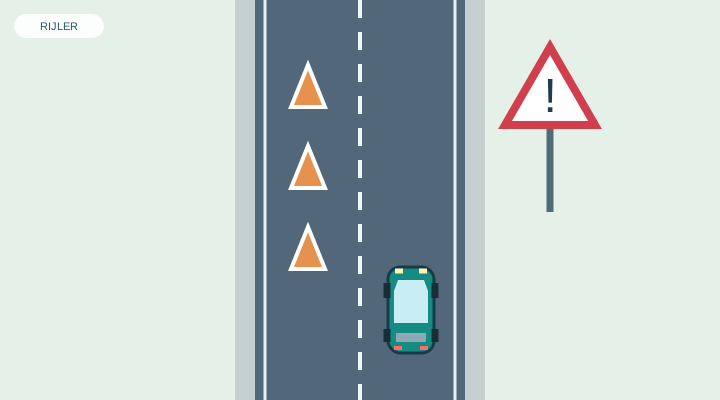
Roadworks
RoadworksOriginal educational diagram · not to scale. Read the question for all conditions.
6

For an ordinary passenger car, the default built-up-area limit is 50 km/h in Flanders and Wallonia, but 30 km/h in Brussels. Signs can impose a different limit.
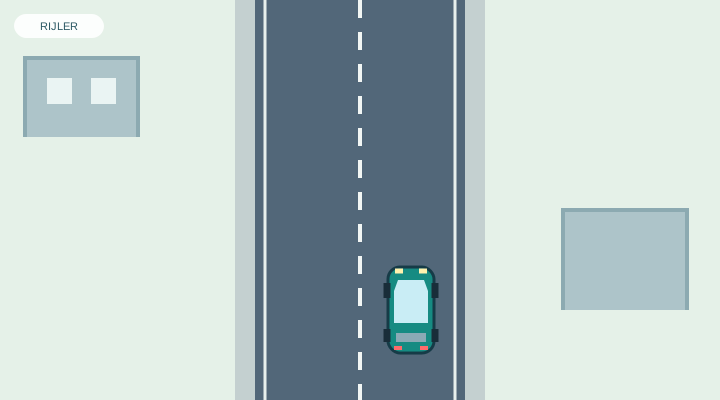
Built-up area
Built-up areaOriginal educational diagram · not to scale. Read the question for all conditions.
7

Outside built-up areas, on an ordinary two-way road with no different limit sign, a passenger car is limited to 70 km/h in Flanders and 90 km/h in Wallonia.
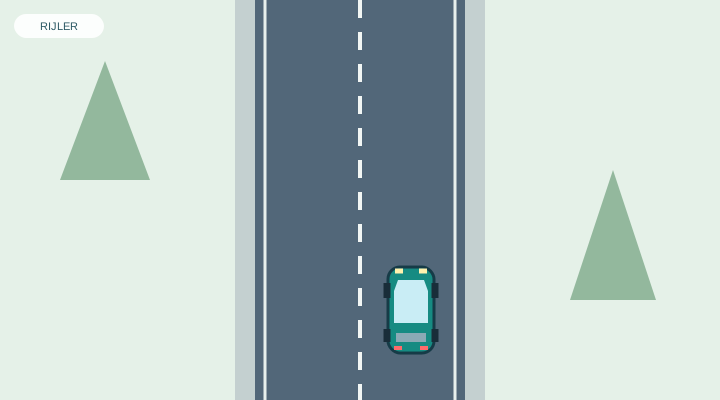
Road outside a built-up area
Road outside a built-up areaOriginal educational diagram · not to scale. Read the question for all conditions.
8

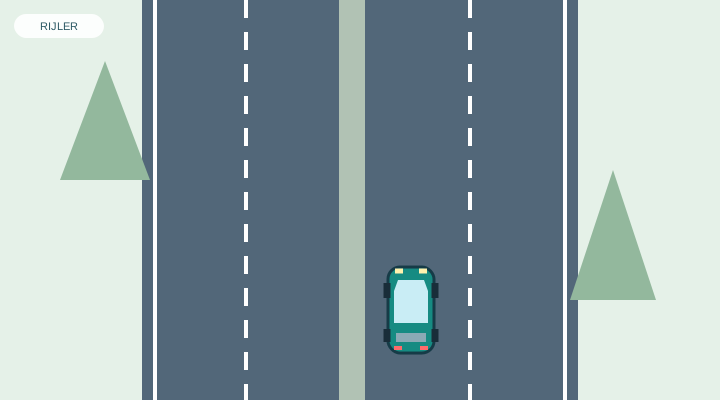
On a motorway, an ordinary passenger car is generally limited to 120 km/h unless a lower limit applies. Always adapt speed to conditions.
Motorway carriageway
Motorway carriagewayOriginal educational diagram · not to scale. Read the question for all conditions.
Regulatory source ↗Reviewed 2026-11-02

Apply the lesson · 8

Question 1

An ordinary car passes a yellow municipal boundary sign in Flanders. It remains outside a built-up area on an ordinary two-way road. No other limit applies. Maximum?

Read the full driving situation
Read the full driving situationOriginal educational diagram · not to scale. Read the question for all conditions.
  1. 30 km/h
  2. 50 km/h
  3. 70 km/h
Show the answer and explanation

Correct answer: C

A yellow municipal boundary is not the built-up-area sign. Apply the current regional road default unless another applicable restriction changes it.

Regulatory source ↗
Question 2

Same ordinary two-way road, but in Wallonia, outside a built-up area. A yellow municipal sign is passed; no other restriction. Maximum?

Read the full driving situation
Read the full driving situationOriginal educational diagram · not to scale. Read the question for all conditions.
  1. 90 km/h
  2. 50 km/h
  3. 70 km/h
Show the answer and explanation

Correct answer: A

A yellow municipal boundary is not the built-up-area sign. Apply the current regional road default unless another applicable restriction changes it.

Regulatory source ↗
Question 3

You enter a built-up area in Brussels. No different signed limit, residential zone or special restriction applies. Maximum for your ordinary car?

Read the full driving situation
Read the full driving situationOriginal educational diagram · not to scale. Read the question for all conditions.
  1. 90 km/h
  2. 30 km/h
  3. 50 km/h
Show the answer and explanation

Correct answer: B

A yellow municipal boundary is not the built-up-area sign. Apply the current regional road default unless another applicable restriction changes it.

Regulatory source ↗
Question 4

You enter a built-up area in Flanders, not a zone 30 or residential zone; no different speed is signed. Maximum?

Read the full driving situation
Read the full driving situationOriginal educational diagram · not to scale. Read the question for all conditions.
  1. 30 km/h
  2. 70 km/h
  3. 50 km/h
Show the answer and explanation

Correct answer: C

A yellow municipal boundary is not the built-up-area sign. Apply the current regional road default unless another applicable restriction changes it.

Regulatory source ↗
Question 5

You pass the beginning of a zone 30, then a junction. There is no end-of-zone sign. What applies beyond the junction?

Read the full driving situation
Read the full driving situationOriginal educational diagram · not to scale. Read the question for all conditions.
  1. The 30 limit continues until the end-of-zone sign.
  2. The ordinary signed limit ends after this junction.
  3. The 20 limit applies throughout the residential zone.
Show the answer and explanation

Correct answer: A

Distinguish a zone, a road-regime boundary and an ordinary speed sign. They do not all end at the next junction.

Regulatory source ↗
Question 6

An ordinary C43 speed limit of 50 is followed by a junction. No zone or other continuing restriction applies; the underlying limit is 70. What happens after the junction?

Read the full driving situation
Read the full driving situationOriginal educational diagram · not to scale. Read the question for all conditions.
  1. The 20 limit applies throughout the residential zone.
  2. The ordinary signed limit ends after this junction.
  3. The administrative boundary alone changes no speed.
Show the answer and explanation

Correct answer: B

Distinguish a zone, a road-regime boundary and an ordinary speed sign. They do not all end at the next junction.

Regulatory source ↗
Question 7

After F12a you pass an internal junction. You have not passed F12b. Which limit still applies?

Read the full driving situation
Read the full driving situationOriginal educational diagram · not to scale. Read the question for all conditions.
  1. The administrative boundary alone changes no speed.
  2. The 30 limit continues until the end-of-zone sign.
  3. The 20 limit applies throughout the residential zone.
Show the answer and explanation

Correct answer: C

Distinguish a zone, a road-regime boundary and an ordinary speed sign. They do not all end at the next junction.

Regulatory source ↗
Question 8

You pass a yellow town-name board without a built-up-area sign or speed sign. What change is caused by that board alone?

Read the full driving situation
Read the full driving situationOriginal educational diagram · not to scale. Read the question for all conditions.
  1. The administrative boundary alone changes no speed.
  2. The 30 limit continues until the end-of-zone sign.
  3. The ordinary signed limit ends after this junction.
Show the answer and explanation

Correct answer: A

Distinguish a zone, a road-regime boundary and an ordinary speed sign. They do not all end at the next junction.

Regulatory source ↗