Dashboard / BELGIAN CATEGORY B
Sign inCreate account
← Speed & safe distance
Apply the lesson · Foundation

Speed & safe distance · Foundation

Educational difficulty is separate from the legal penalty. These are original practice questions, not official examination items.

Lesson

Even below the speed limit, reduce speed when visibility or grip deteriorates.

In a signed 30 km/h zone, 30 km/h is the maximum, not a target.

Increase your following distance in rain.

Your stopping distance includes reaction distance and braking distance.

A temporary lower speed limit must be respected at roadworks.

For an ordinary passenger car, the default built-up-area limit is 50 km/h in Flanders and Wallonia, but 30 km/h in Brussels. Signs can impose a different limit.

Outside built-up areas, on an ordinary two-way road with no different limit sign, a passenger car is limited to 70 km/h in Flanders and 90 km/h in Wallonia.

On a motorway, an ordinary passenger car is generally limited to 120 km/h unless a lower limit applies. Always adapt speed to conditions.

Regulatory source ↗
Apply the lesson · 15

Question 1

Speed & safe distance: which statement is correct? (1)

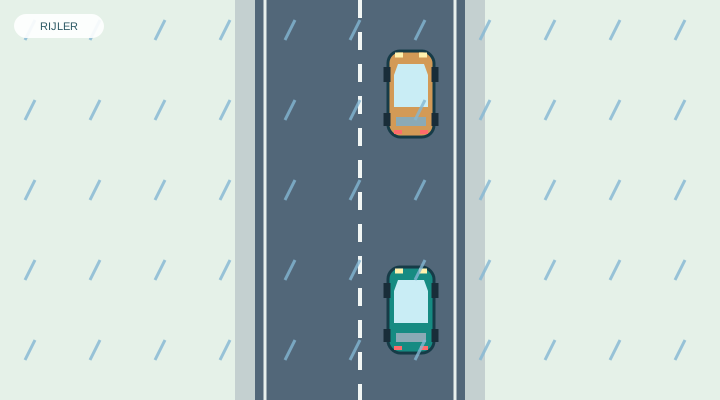
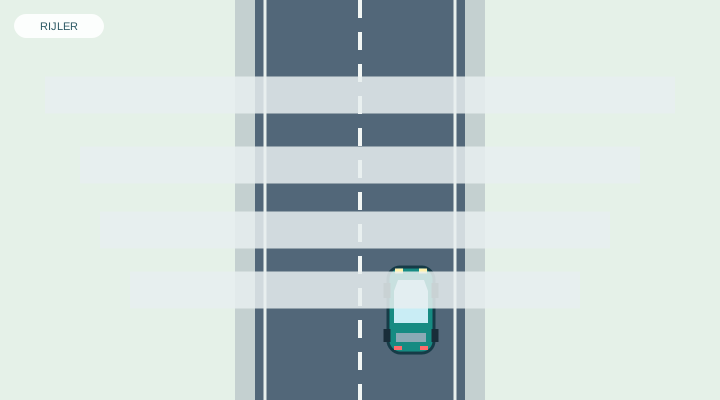
Reduced visibility
Reduced visibilityOriginal educational diagram · not to scale. Read the question for all conditions.
  1. A speed limit is a minimum speed in all weather.
  2. Driving close behind makes emergency braking safer.
  3. Even below the speed limit, reduce speed when visibility or grip deteriorates.
Show the answer and explanation

Correct answer: C

Even below the speed limit, reduce speed when visibility or grip deteriorates.

Regulatory source ↗
Question 2

Speed & safe distance: which statement is correct? (2)

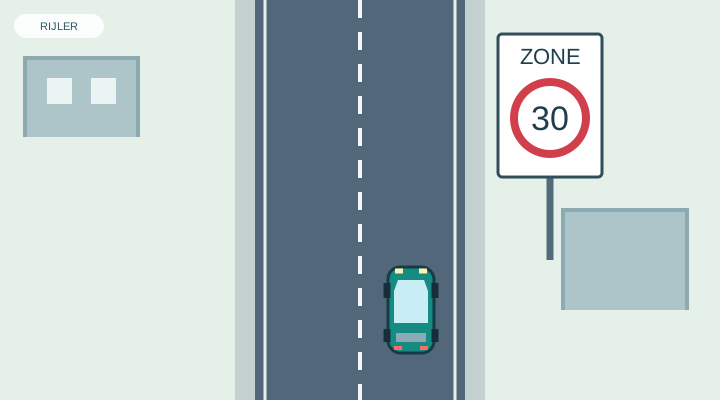
Zone 30
Zone 30Original educational diagram · not to scale. Read the question for all conditions.
  1. In a signed 30 km/h zone, 30 km/h is the maximum, not a target.
  2. A speed limit is a minimum speed in all weather.
  3. Driving close behind makes emergency braking safer.
Show the answer and explanation

Correct answer: A

In a signed 30 km/h zone, 30 km/h is the maximum, not a target.

Regulatory source ↗
Question 3

Speed & safe distance: which statement is correct? (3)

Following in rain
Following in rainOriginal educational diagram · not to scale. Read the question for all conditions.
  1. A speed limit is a minimum speed in all weather.
  2. Increase your following distance in rain.
  3. Driving close behind makes emergency braking safer.
Show the answer and explanation

Correct answer: B

Increase your following distance in rain.

Regulatory source ↗
Question 4

Speed & safe distance: which statement is correct? (4)

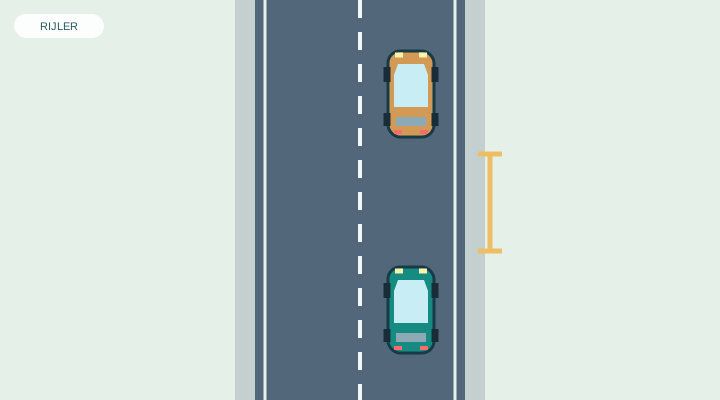
Reaction and braking space
Reaction and braking spaceOriginal educational diagram · not to scale. Read the question for all conditions.
  1. A speed limit is a minimum speed in all weather.
  2. Driving close behind makes emergency braking safer.
  3. Your stopping distance includes reaction distance and braking distance.
Show the answer and explanation

Correct answer: C

Your stopping distance includes reaction distance and braking distance.

Regulatory source ↗
Question 5

Speed & safe distance: which statement is correct? (5)

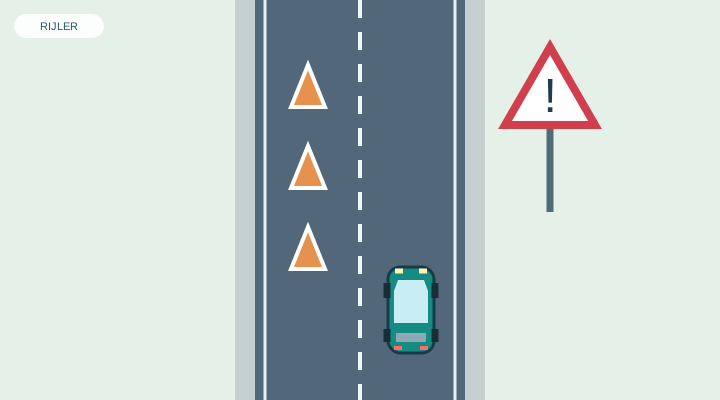
Roadworks
RoadworksOriginal educational diagram · not to scale. Read the question for all conditions.
  1. A temporary lower speed limit must be respected at roadworks.
  2. A speed limit is a minimum speed in all weather.
  3. Driving close behind makes emergency braking safer.
Show the answer and explanation

Correct answer: A

A temporary lower speed limit must be respected at roadworks.

Regulatory source ↗
Question 6

You drive a passenger car in a built-up area in Flanders. No sign or special zone changes the default limit. What is the maximum?

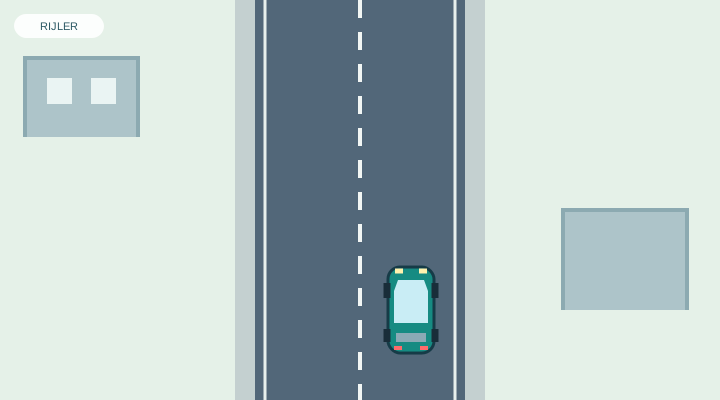
Built-up area
Built-up areaOriginal educational diagram · not to scale. Read the question for all conditions.
  1. 30 km/h
  2. 50 km/h
  3. 70 km/h
Show the answer and explanation

Correct answer: B

For an ordinary passenger car, the default built-up-area limit is 50 km/h in Flanders and Wallonia, but 30 km/h in Brussels. Signs can impose a different limit.

Regulatory source ↗
Question 7

You enter a built-up area in Wallonia in an ordinary car. There is no other speed sign or special zone. What limit applies?

Built-up area
Built-up areaOriginal educational diagram · not to scale. Read the question for all conditions.
  1. 30 km/h
  2. 50 km/h
  3. 90 km/h
Show the answer and explanation

Correct answer: B

For an ordinary passenger car, the default built-up-area limit is 50 km/h in Flanders and Wallonia, but 30 km/h in Brussels. Signs can impose a different limit.

Regulatory source ↗
Question 8

You enter a built-up area in Brussels. No sign permits a different speed. What is the default maximum for your car?

Built-up area
Built-up areaOriginal educational diagram · not to scale. Read the question for all conditions.
  1. 30 km/h
  2. 50 km/h
  3. 70 km/h
Show the answer and explanation

Correct answer: A

For an ordinary passenger car, the default built-up-area limit is 50 km/h in Flanders and Wallonia, but 30 km/h in Brussels. Signs can impose a different limit.

Regulatory source ↗
Question 9

You drive outside a built-up area in Flanders on an ordinary two-way road. There are no speed signs. What maximum applies to your passenger car?

Road outside a built-up area
Road outside a built-up areaOriginal educational diagram · not to scale. Read the question for all conditions.
  1. 50 km/h
  2. 70 km/h
  3. 90 km/h
Show the answer and explanation

Correct answer: B

Outside built-up areas, on an ordinary two-way road with no different limit sign, a passenger car is limited to 70 km/h in Flanders and 90 km/h in Wallonia.

Regulatory source ↗
Question 10

You drive outside a built-up area in Wallonia on an ordinary two-way road without a different limit sign. What is the maximum for your passenger car?

Road outside a built-up area
Road outside a built-up areaOriginal educational diagram · not to scale. Read the question for all conditions.
  1. 70 km/h
  2. 90 km/h
  3. 120 km/h
Show the answer and explanation

Correct answer: B

Outside built-up areas, on an ordinary two-way road with no different limit sign, a passenger car is limited to 70 km/h in Flanders and 90 km/h in Wallonia.

Regulatory source ↗
Question 11

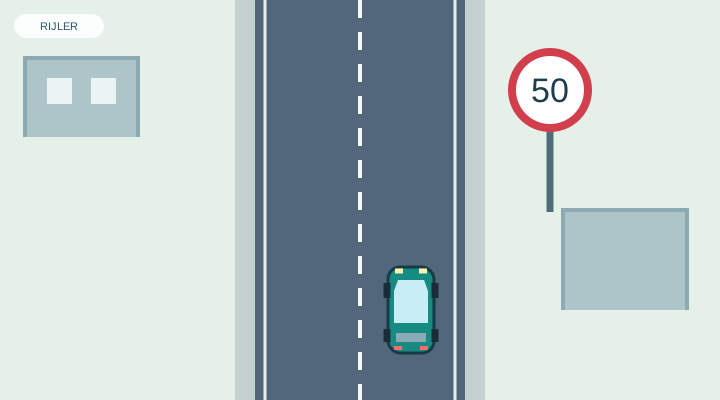
On a Brussels road a valid speed sign explicitly permits 50 km/h. No lower rule applies. What is the maximum speed?

Posted 50 km/h limit
Posted 50 km/h limitOriginal educational diagram · not to scale. Read the question for all conditions.
  1. 30 km/h
  2. 50 km/h
  3. 70 km/h
Show the answer and explanation

Correct answer: B

For an ordinary passenger car, the default built-up-area limit is 50 km/h in Flanders and Wallonia, but 30 km/h in Brussels. Signs can impose a different limit.

Regulatory source ↗
Question 12

You drive an ordinary passenger car on a Belgian motorway with no lower speed limit. In good conditions, what is the general legal maximum?

Motorway carriageway
Motorway carriagewayOriginal educational diagram · not to scale. Read the question for all conditions.
  1. 90 km/h
  2. 120 km/h
  3. 130 km/h
Show the answer and explanation

Correct answer: B

On a motorway, an ordinary passenger car is generally limited to 120 km/h unless a lower limit applies. Always adapt speed to conditions.

Regulatory source ↗
Question 13

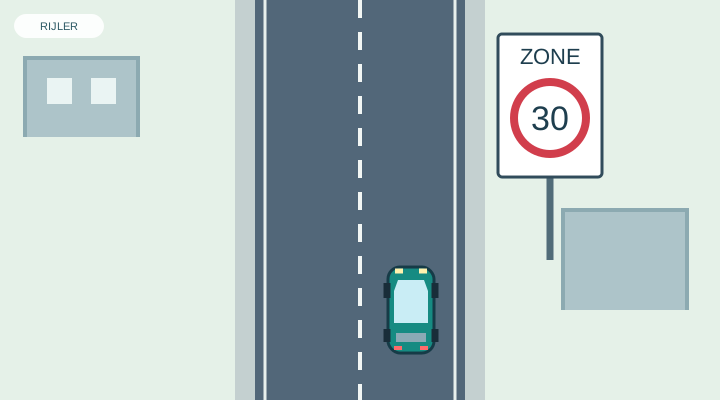
You enter a signed zone 30. The road is wide and empty. What is the legal maximum?

Zone 30
Zone 30Original educational diagram · not to scale. Read the question for all conditions.
  1. 30 km/h
  2. 50 km/h
  3. 70 km/h
Show the answer and explanation

Correct answer: A

In a signed 30 km/h zone, 30 km/h is the maximum, not a target.

Regulatory source ↗
Question 14

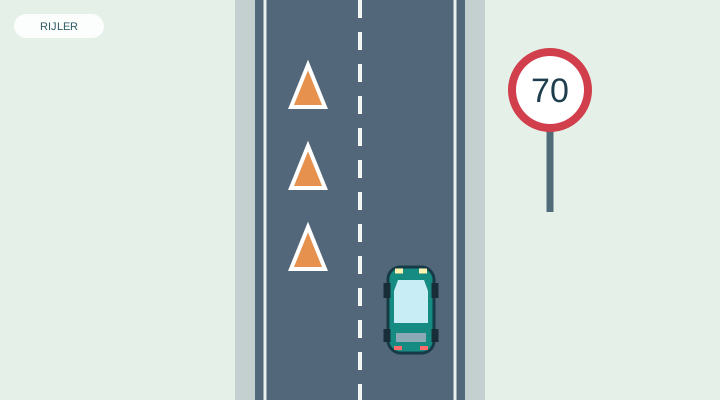
A temporary 70 km/h sign applies at motorway roadworks. What is the maximum for your car here?

Roadworks
RoadworksOriginal educational diagram · not to scale. Read the question for all conditions.
  1. 70 km/h
  2. 90 km/h
  3. 120 km/h
Show the answer and explanation

Correct answer: A

A temporary lower speed limit must be respected at roadworks.

Regulatory source ↗
Question 15

What does the pictured sign mean?

Traffic sign C43
Traffic sign C43Identify the pictured sign. Read any displayed numbers and supplementary conditions.
  1. Maximum speed shown on the sign
  2. Cycles and class A mopeds crossing in both directions
  3. Beginning of airport zone
Show the answer and explanation

Correct answer: A

Maximum speed shown on the sign. Respect the indicated restriction, its scope and any exceptions on supplementary panels.

Regulatory source ↗