Dashboard / BELGIAN CATEGORY B
Sign inCreate account
← Signs & traffic lights
Apply the lesson · Standard

Signs & traffic lights · Standard

Educational difficulty is separate from the legal penalty. These are original practice questions, not official examination items.

Lesson

A red traffic light requires you to stop.

A triangular warning sign alerts you to a hazard ahead.

A circular blue mandatory sign tells you an obligation to follow.

A no-entry sign prohibits entering from that direction.

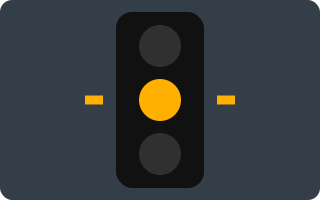
At an amber light, stop unless you are too close to stop safely when it appears.

Regulatory source ↗

Apply the lesson · 20

Question 1

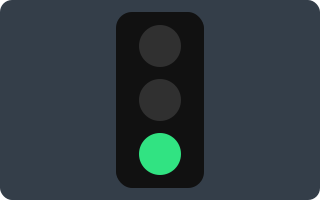
Late at night the road is empty and your traffic light is red. How do you respond?
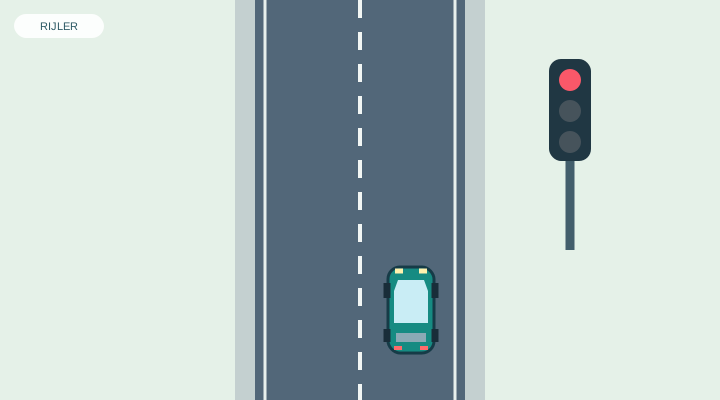
Red signal
Red signalOriginal educational diagram · not to scale. Read the question for all conditions.
  1. Pass slowly after looking both ways.
  2. Treat red as green when no one is nearby.
  3. A red traffic light requires you to stop.
Show the answer and explanation

Correct answer: C

A red traffic light requires you to stop.

Regulatory source ↗
Question 2

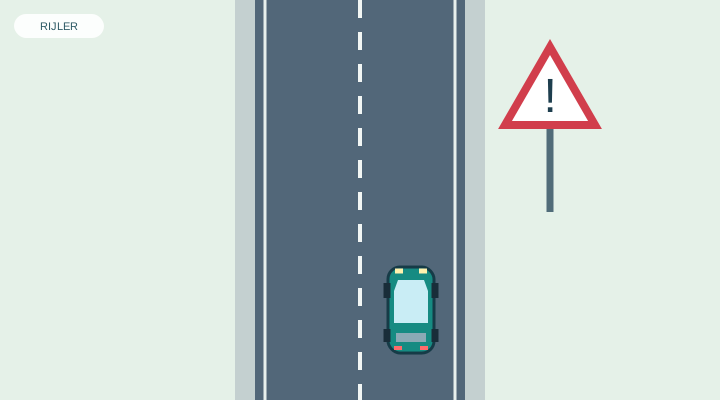
A red-bordered triangular sign stands before a bend. What kind of message does this shape convey?

Warning sign
Warning signOriginal educational diagram · not to scale. Read the question for all conditions.
  1. A triangular warning sign alerts you to a hazard ahead.
  2. A parking reservation.
  3. Permission to ignore hazards.
Show the answer and explanation

Correct answer: A

A triangular warning sign alerts you to a hazard ahead.

Regulatory source ↗
Question 3

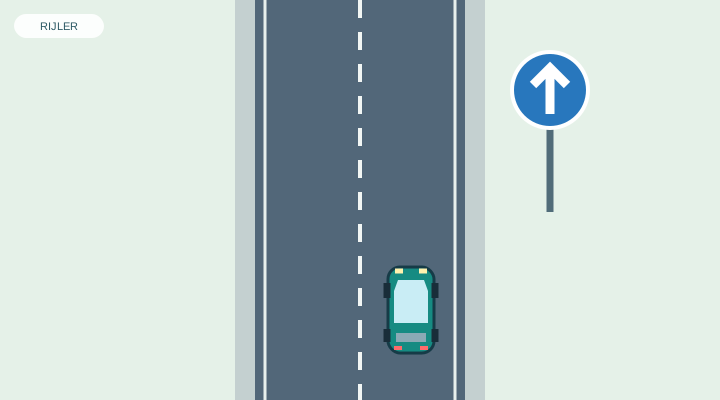
A circular blue sign shows a straight arrow at your approach. How should you interpret it?

Mandatory direction
Mandatory directionOriginal educational diagram · not to scale. Read the question for all conditions.
  1. It is just a route suggestion.
  2. A circular blue mandatory sign tells you an obligation to follow.
  3. It reserves a parking place.
Show the answer and explanation

Correct answer: B

A circular blue mandatory sign tells you an obligation to follow.

Regulatory source ↗
Question 4

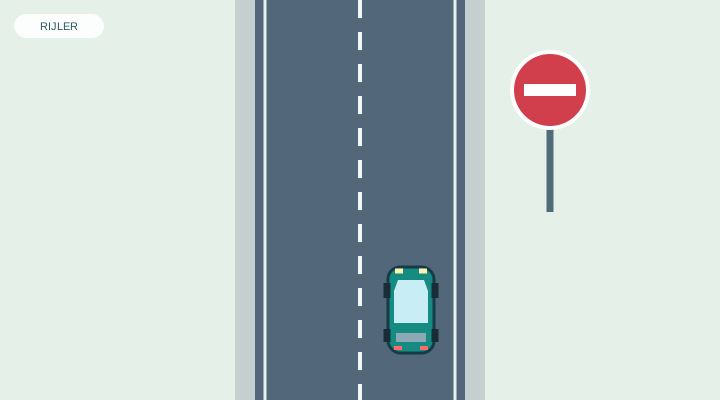
Your navigation app tells you to enter a street with a no-entry sign facing you. What controls your decision?

No entry
No entryOriginal educational diagram · not to scale. Read the question for all conditions.
  1. The navigation app overrules the sign.
  2. You may enter if the street looks empty.
  3. A no-entry sign prohibits entering from that direction.
Show the answer and explanation

Correct answer: C

A no-entry sign prohibits entering from that direction.

Regulatory source ↗
Question 5

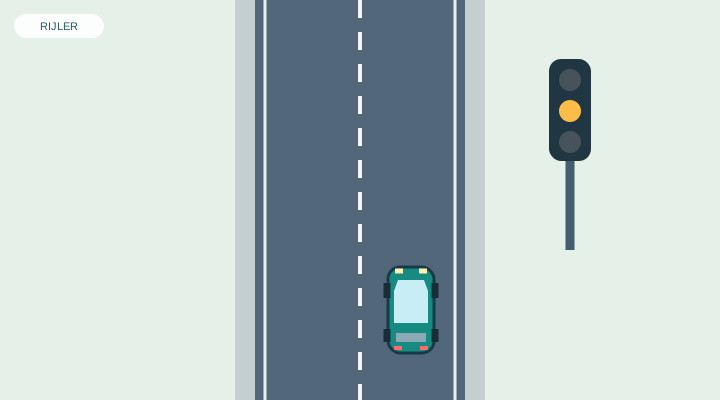
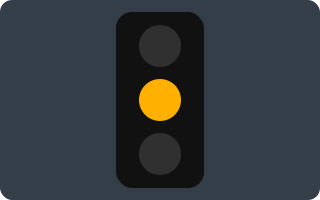
A steady amber light appears while you still have enough distance to stop safely. What applies?

Amber signal
Amber signalOriginal educational diagram · not to scale. Read the question for all conditions.
  1. At an amber light, stop unless you are too close to stop safely when it appears.
  2. Accelerate to clear it before red.
  3. Amber always means continue.
Show the answer and explanation

Correct answer: A

At an amber light, stop unless you are too close to stop safely when it appears.

Regulatory source ↗
Question 6

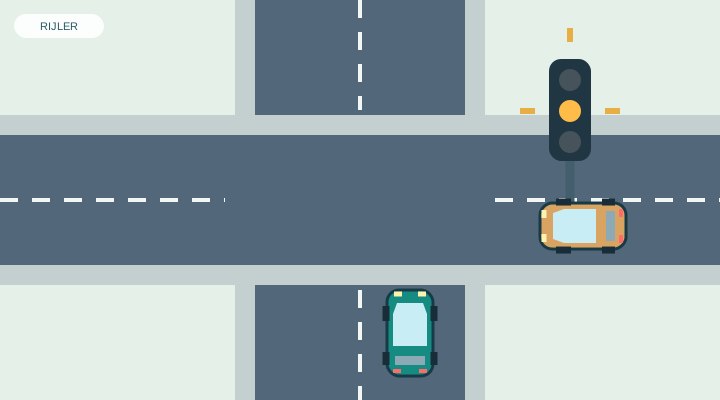
A junction signal flashes amber. Does that give your approach automatic priority?

Flashing amber
Flashing amberOriginal educational diagram · not to scale. Read the question for all conditions.
  1. Yes, it is identical to an unconditional green.
  2. Yes, flashing always overrides a STOP sign.
  3. No; apply the priority signs and rules with extra caution.
Show the answer and explanation

Correct answer: C

A flashing amber signal calls for extra caution. It does not create priority or cancel the priority signs and rules at the junction. Distinguish it from a steady amber light.

Regulatory source ↗
Question 7

A STOP sign remains at a junction whose traffic lights flash amber. What must you do at STOP?

Flashing amber
Flashing amberOriginal educational diagram · not to scale. Read the question for all conditions.
  1. Come to a complete stop and give way as required.
  2. Only slow down because the flashing light cancels STOP.
  3. Follow the vehicle ahead without observing.
Show the answer and explanation

Correct answer: A

A flashing amber signal calls for extra caution. It does not create priority or cancel the priority signs and rules at the junction. Distinguish it from a steady amber light.

Regulatory source ↗
Question 8

C1 faces you at the entrance. No exemption applies to your car.

Traffic sign C1
Traffic sign C1Identify the pictured sign. Read any displayed numbers and supplementary conditions.
  1. Enter if no oncoming vehicle is visible.
  2. Do not enter from this direction.
  3. Enter briefly with hazard lights.
Show the answer and explanation

Correct answer: B

C1 prohibits entry from this direction. C3 prohibits access in both directions; read any applicable exemption.

Regulatory source ↗
Question 9

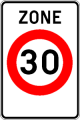
You pass a junction inside a signed zone 30. No end-of-zone sign appears.

Traffic sign F4a
Traffic sign F4aIdentify the pictured sign. Read any displayed numbers and supplementary conditions.
  1. The zone limit continues.
  2. The limit automatically ends at the junction.
  3. Only the opposite lane remains limited.
Show the answer and explanation

Correct answer: A

A zone boundary is different from the scope of an ordinary isolated speed sign. Follow the zone until its signed end.

Regulatory source ↗
Question 10

Which mass must you read correctly before entering a restricted road?

Traffic sign C21
Traffic sign C21Identify the pictured sign. Read any displayed numbers and supplementary conditions.
  1. Every tonne inscription always means empty vehicle mass.
  2. Distinguish laden mass from maximum authorised mass in the exact sign rule.
  3. All mass signs apply only to buses.
Show the answer and explanation

Correct answer: B

C21 concerns laden mass; C23 targets the indicated goods-vehicle category and may include a maximum-authorised-mass plate. They are not interchangeable.

Regulatory source ↗
Question 11

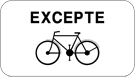
A one-way road has a cycle exception panel. What should a car driver anticipate?

Traffic sign M2
Traffic sign M2Identify the pictured sign. Read any displayed numbers and supplementary conditions.
  1. Cars may also drive against the direction.
  2. No one can ever approach from ahead.
  3. Permitted cyclists may approach from the opposite direction.
Show the answer and explanation

Correct answer: C

The exception concerns the users shown, not every vehicle. Check the panel and maintain safe clearance.

Regulatory source ↗
Question 12

A pedestrian is about to enter an uncontrolled marked crossing.

Traffic sign A21
Traffic sign A21Identify the pictured sign. Read any displayed numbers and supplementary conditions.
  1. Approach cautiously and give way.
  2. Sound the horn and keep speed.
  3. Give way only after the pedestrian reaches your lane.
Show the answer and explanation

Correct answer: A

A21 warns of a crossing ahead; F49 identifies its position. At an uncontrolled crossing, yield to pedestrians entering or about to enter.

Regulatory source ↗
Question 13

Your light is green but the exit of the junction is blocked.

Traffic sign 61
Traffic sign 61Identify the pictured sign. Read any displayed numbers and supplementary conditions.
  1. Enter because green always grants room.
  2. Wait before entering until you can clear the junction.
  3. Stop in the middle and use the horn.
Show the answer and explanation

Correct answer: B

Green is permission to proceed subject to other obligations; it does not permit obstructing the junction.

Regulatory source ↗
Question 14

Steady amber appears while you still have enough distance to stop safely.

Traffic sign 61
Traffic sign 61Identify the pictured sign. Read any displayed numbers and supplementary conditions.
  1. Accelerate to pass before red.
  2. Amber has exactly the same meaning as green.
  3. Stop before the line or signal.
Show the answer and explanation

Correct answer: C

The exception is inability to stop safely at its appearance, not convenience or impatience.

Regulatory source ↗
Question 15

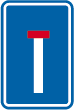
Does a no-through-road sign alone mean cars may not enter?

Traffic sign F45
Traffic sign F45Identify the pictured sign. Read any displayed numbers and supplementary conditions.
  1. Yes, it always means C1.
  2. No; distinguish information about the route from an entry prohibition.
  3. It always guarantees a place to turn.
Show the answer and explanation

Correct answer: B

F45 indicates no through road. F45b shows continuity for pedestrians and cyclists. Check other restrictions and plan a safe exit.

Regulatory source ↗
Question 16

A traffic light flashes amber. What happens to the priority signs?

Traffic sign 64
Traffic sign 64Identify the pictured sign. Read any displayed numbers and supplementary conditions.
  1. They are all cancelled.
  2. Flashing amber gives unconditional priority.
  3. Remain cautious and apply the applicable signs and priority rules.
Show the answer and explanation

Correct answer: C

Flashing amber warns of caution; it does not remove the duty to obey the applicable priority controls.

Regulatory source ↗
Question 17

A dangerous-bend warning appears on a wet road.

Traffic sign A1a
Traffic sign A1aIdentify the pictured sign. Read any displayed numbers and supplementary conditions.
  1. Reduce speed before the bend and steer smoothly.
  2. Brake sharply halfway through the bend.
  3. The sign guarantees grip at the posted maximum speed.
Show the answer and explanation

Correct answer: A

A warning requires anticipation. A speed limit is a maximum, not a guarantee of safe grip.

Regulatory source ↗
Question 18

A mandatory direction points right. A pedestrian is crossing your turning path.

Traffic sign D1
Traffic sign D1Identify the pictured sign. Read any displayed numbers and supplementary conditions.
  1. Turn immediately because the arrow gives priority.
  2. Follow the required direction only after yielding as required.
  3. Drive onto the pavement to avoid waiting.
Show the answer and explanation

Correct answer: B

A mandatory direction governs route choice, not priority over vulnerable road users.

Regulatory source ↗
Question 19

You missed a turn and a continuous line separates the next lane.

Traffic sign 72
Traffic sign 72Identify the pictured sign. Read any displayed numbers and supplementary conditions.
  1. Cross the line because you used an indicator.
  2. Reverse along the lane to the missed turn.
  3. Continue safely and choose another permitted route.
Show the answer and explanation

Correct answer: C

An indicator announces intention; it does not permit crossing a continuous line.

Regulatory source ↗
Question 20

C43 shows 50 but visibility only permits safe travel at 30.

Traffic sign C43
Traffic sign C43Identify the pictured sign. Read any displayed numbers and supplementary conditions.
  1. Adapt speed to visibility and remain below the maximum.
  2. Maintain exactly 50 because the sign requires it.
  3. Ignore the limit when the road becomes clear.
Show the answer and explanation

Correct answer: A

C43 states a maximum. General duties to adapt speed still apply.

Regulatory source ↗